The Labyrinth
Perhaps the greatest fete of civil engineering within the country, and equally great fete of secrecy among those inhabiting Harroway are the tunnels that form The Labyrinth. Since their inception, The Labyrinth tunnels have served as refuge, storage for valuable goods, and hidden meeting places for local councils and resistance movements.
The vault and tunnels remain a key defensive and refuge asset for Harroway to this day and the longest escape tunnel remains a closely guarded secret, providing a vital escape path in the most dire emergency.
Developments up to c.1070
As the winter of 1068 settled over the Valley, the fledgling alliance of tribes turned their focus from survival to permanence. Their chosen site lay just west of Lannwyd Falls, where a high cliff overlooked the forest below and the narrow river gorge.
Here, under the leadership of the Durnovarni, they began carving a fortified structure directly into the cliff face a place of both watchfulness and refuge. What would later be known simply as the Fort became the cradle of resistance.
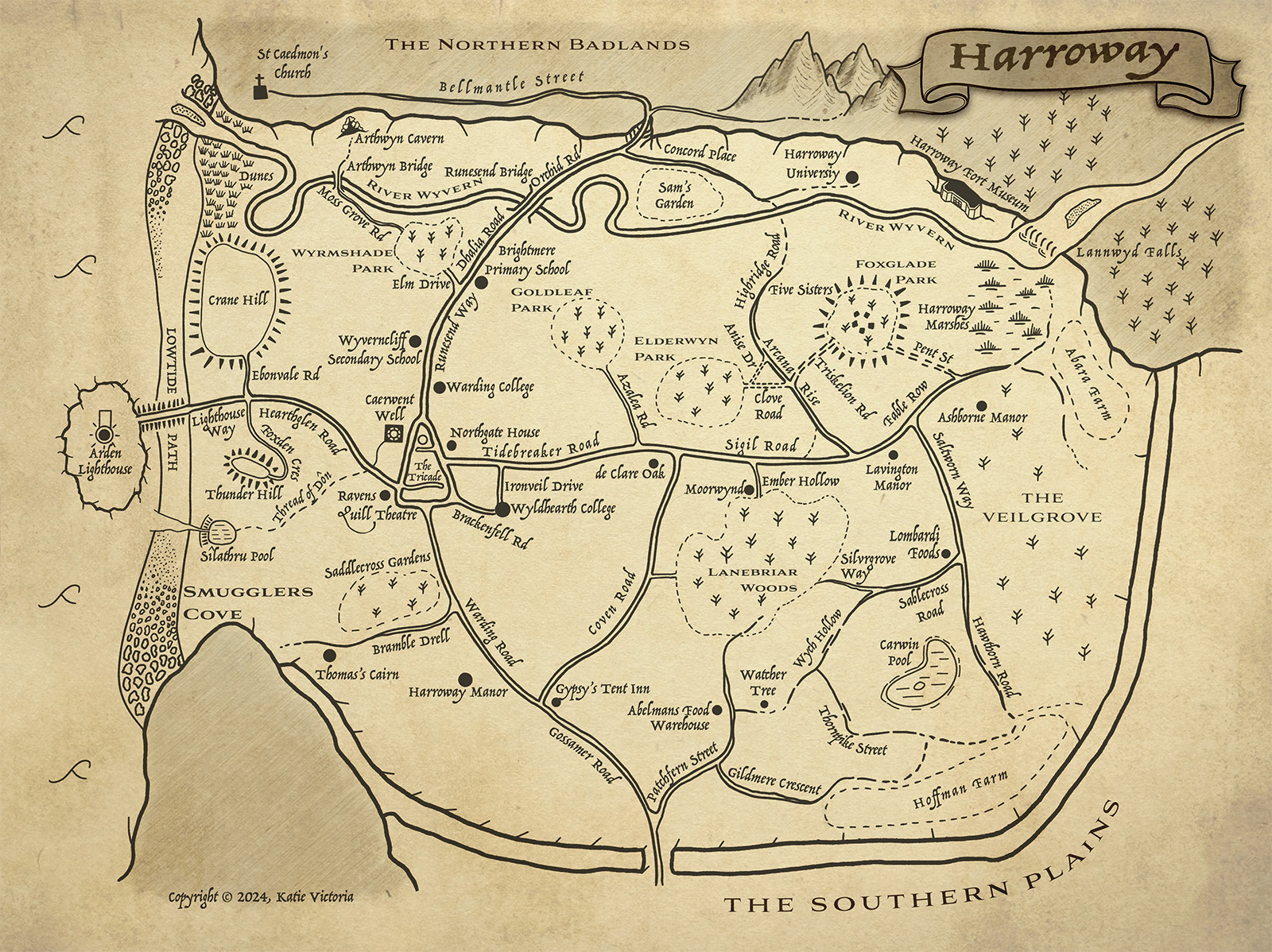
Plans shifted. The fort’s hollowed interior was expanded downward, forming the beginnings of what would become a vast hidden infrastructure. The Tunnels of Light, as they came to be known, were carved entirely within the cliffs beneath the fort. There was only one entrance cleverly concealed behind a stonework facade and shrouded in brambles, invisible even at close range. The tribes agreed: secrecy was survival. The entrance would be guarded, hidden, and never spoken of beyond trusted circles.
From this single access point, the tunnels wound deep into the rock, branching out into chambers lit by embedded crystal. Some were designed for storage, others for quiet ritual, and others still as fallback shelters should the fort ever fall. Engineers and artisans from the Durnovarni led the construction, assisted by skilled stonecutters from the Atrebates and visionaries from the Coinosolites, who planned false chambers, echoing passageways, and dead-end shafts meant to confuse any intruder who might stumble too far inside.
The construction of the Great Vault c.1307
Amid rising tensions across the Marches and the unpredictable tides of war and famine, the early 14th century saw Harroway’s leadership take bold action to secure the community’s survival. Between 1302 and 1307, one of the most ambitious feats of subterranean engineering in Harroway’s history was undertaken: the excavation of the Great Vault.
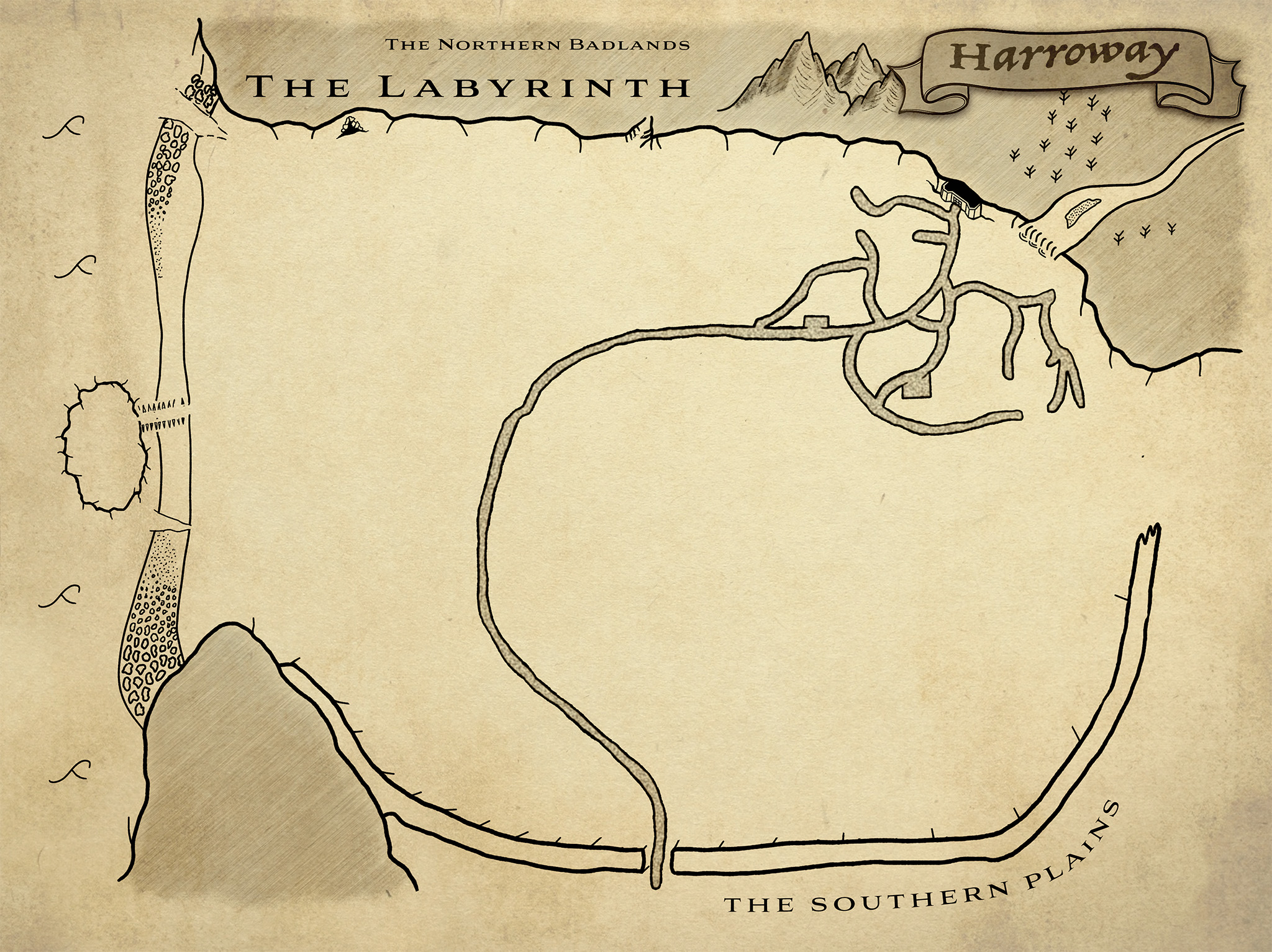
Planned under the guidance of senior masons, civic leaders, and likely with the cautious blessing of Thomas de Clare, the vault was conceived as a last refuge a secure space where the village’s people, grain reserves, tools, and cultural treasures could be shielded from siege, plague, or natural disaster. Unlike the narrow escape routes or ritual chambers of earlier centuries, this was to be a vast and enduring sanctuary.
Work began in the early spring of 1302, focusing on a stable section of the cliffside bedrock, some 20 to 30 metres below ground, depending on the natural fault lines. Teams of skilled tunnelers, stonecutters, and labourers numbering in the hundreds at peak spent five years chiselling and reinforcing the chamber, its final size estimated at nearly 100 by 50 metres. The labour was gruelling and dangerous, with workers employing iron picks, chisels, rope scaffolds, and primitive blasting techniques involving heated stone and cold water to fracture rock.
A defining feature of the vault was its integration of luminous crystals, long harvested and stored by the Harroway community. These ancient, softly glowing minerals were set meticulously into the arched ceilings and supporting walls, casting a steady, cold light and eliminating the need for torches or open flame—a practical safeguard in such a deep and enclosed space.
During the later stages of excavation, workers uncovered new crystal veins, richer and more vibrant than any previously documented. These were added to existing crystal reserves, and also directly into the design, forming constellations of natural light overhead and earning the chamber its later epithet: “The Starlit Hollow”.
By autumn 1307, the vault had been completed, its entrances well-concealed, its stonework reinforced, and its chambers lined with bins, crates, and casks. While no record suggests it was ever used for its full intended purpose, its construction marked a turning point: a collective decision by Harroway’s people to endure not just as a village, but as a civilisation with memory, planning and foresight.
The Great Vault remains one of the most enduring symbols of Harroway’s will to survive, not merely as a hole in the earth, but a monument to quiet defiance and long preparation.
Periodic tunnel maintenance and small expansions continue to occur, including adding further false passages to confuse invaders.
The modern regeneration c.1898
The last known major excavation and restoration effort takes place in the late 19th century, expanding and reinforcing parts of the labyrinth and vault, ensuring structural integrity and accessibility.
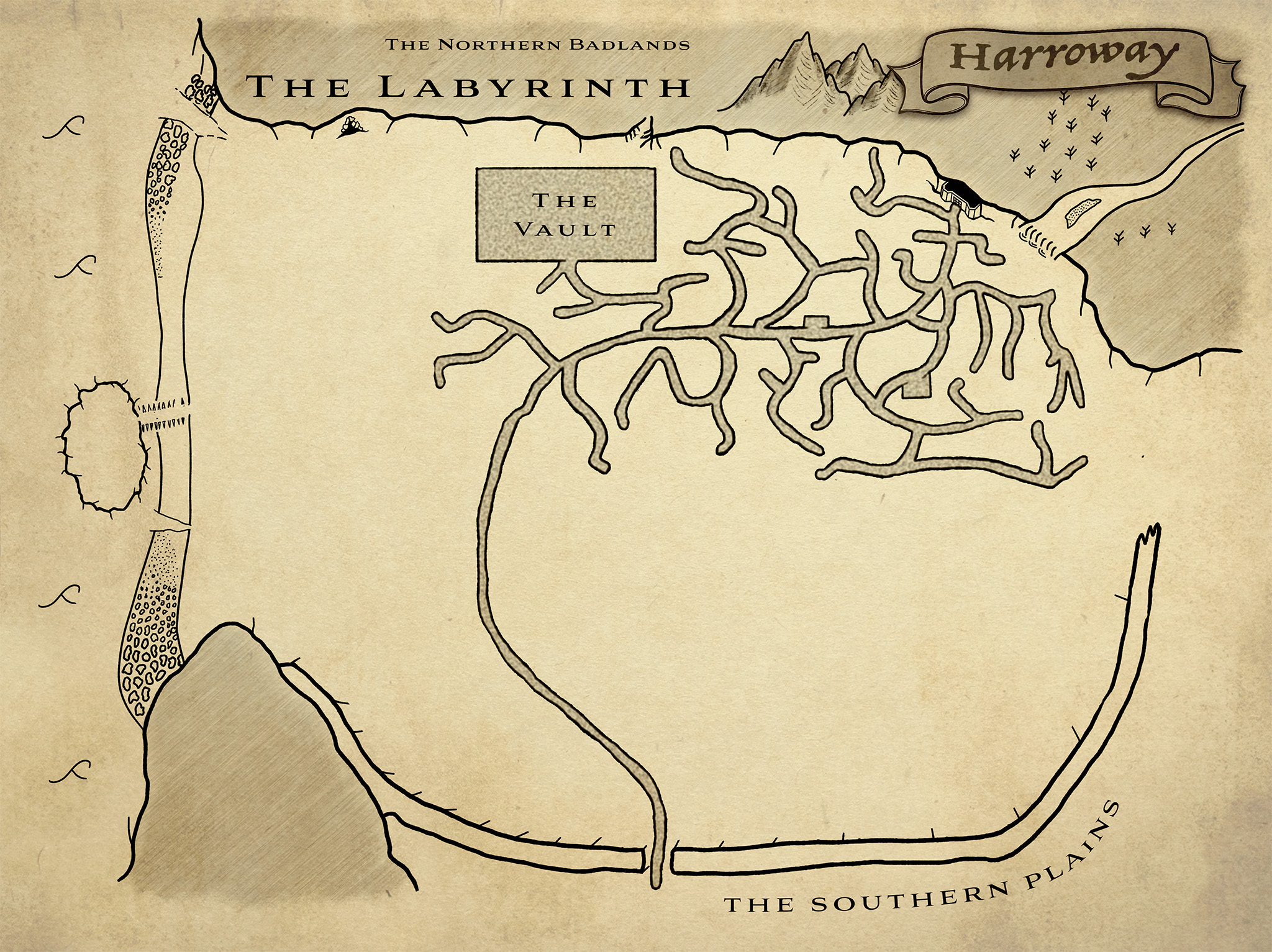
During this period of advancing technology, the leaders of Harroway realise the great value in the tunnels not just as a defensive asset, but as a way to limit environmental damage above ground. Under strict control of information, a considerable expansion of the tunnels took place, with some areas close to the Fort entrance being fitted with a rail network to improve the logistics of resource storage. Citizens who work in these areas are closely vetted and highly trusted members of the community.
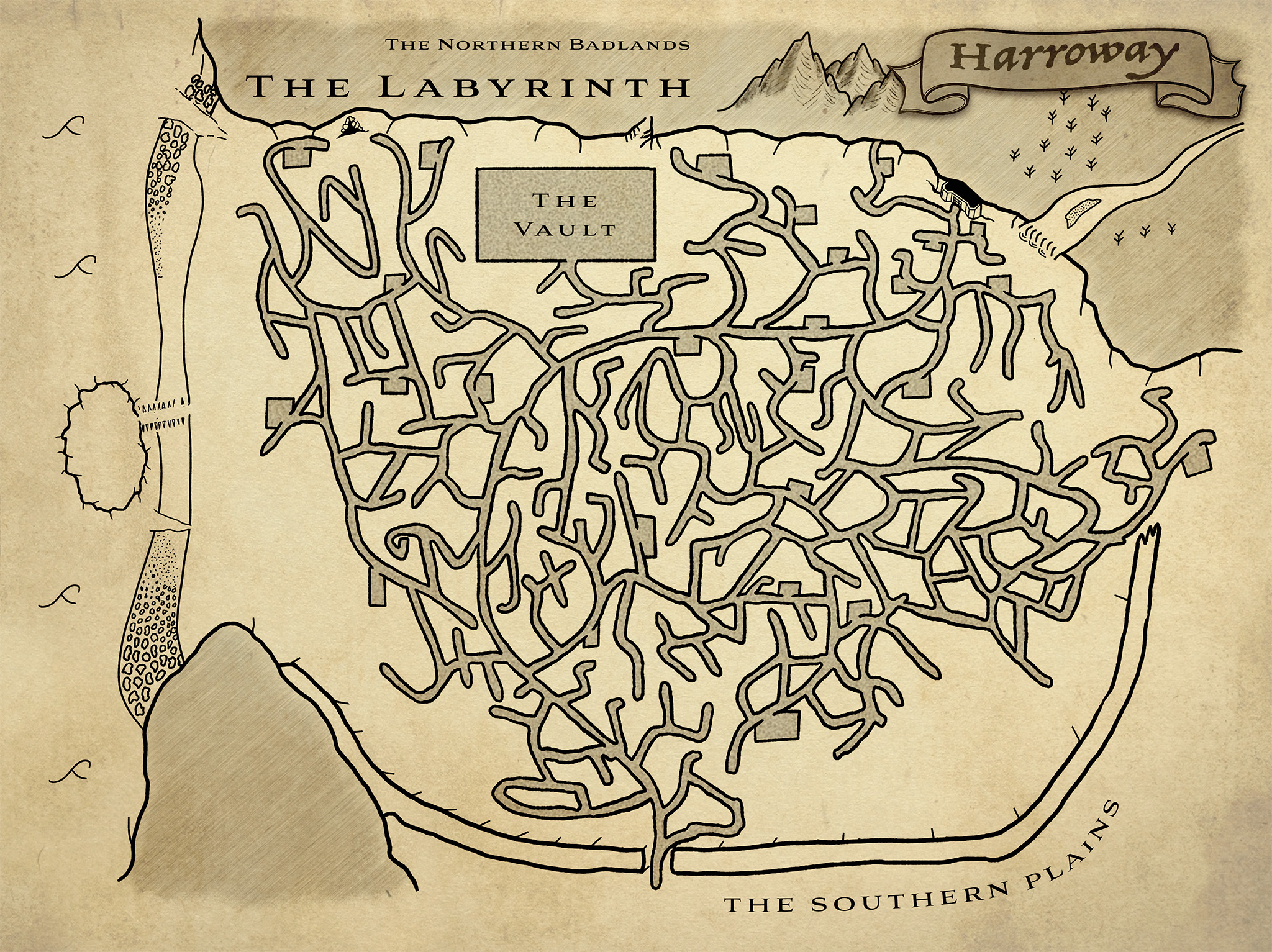
The newest excavations were extended far toward the coast and the south of Harroway, and remain top secret with only the highest ranking members of society being authorised to enter. During this period of expansion, several workers became mentally disturbed and killed themselves unexpectedly, leading to several areas of the new tunnels being adandoned due to workers refusing to enter.
The Labyrinthian Standoff
The overall topology of the tunnels was once recorded on paper and held by civic leaders, but due to concerns of this information being leaked outside Harroway, two individuals from across the communities were selected and tasked with memorising their layout before the paper maps were destroyed forever. They became known as the Labyrinthians, and their knowledge is now passed down from one generation to another. Anyone entering the tunnels does so (if they value their life) with a Labyrinthian as a guide to ensure they avoid the no-go areas.
In recent times, the leaders of Harroway have wanted to map the Labyrinth, and keep the data securely on computer systems. The Labyrinthians are currently refusing to pass their information on for reasons of tradition and security. The extended tunnels remain the source of many rumours and folklore regarding what lurks within.